
Water Pooling Around the Furnace or Air Handler? Why the Condensate Line Clogs
September 12, 2026
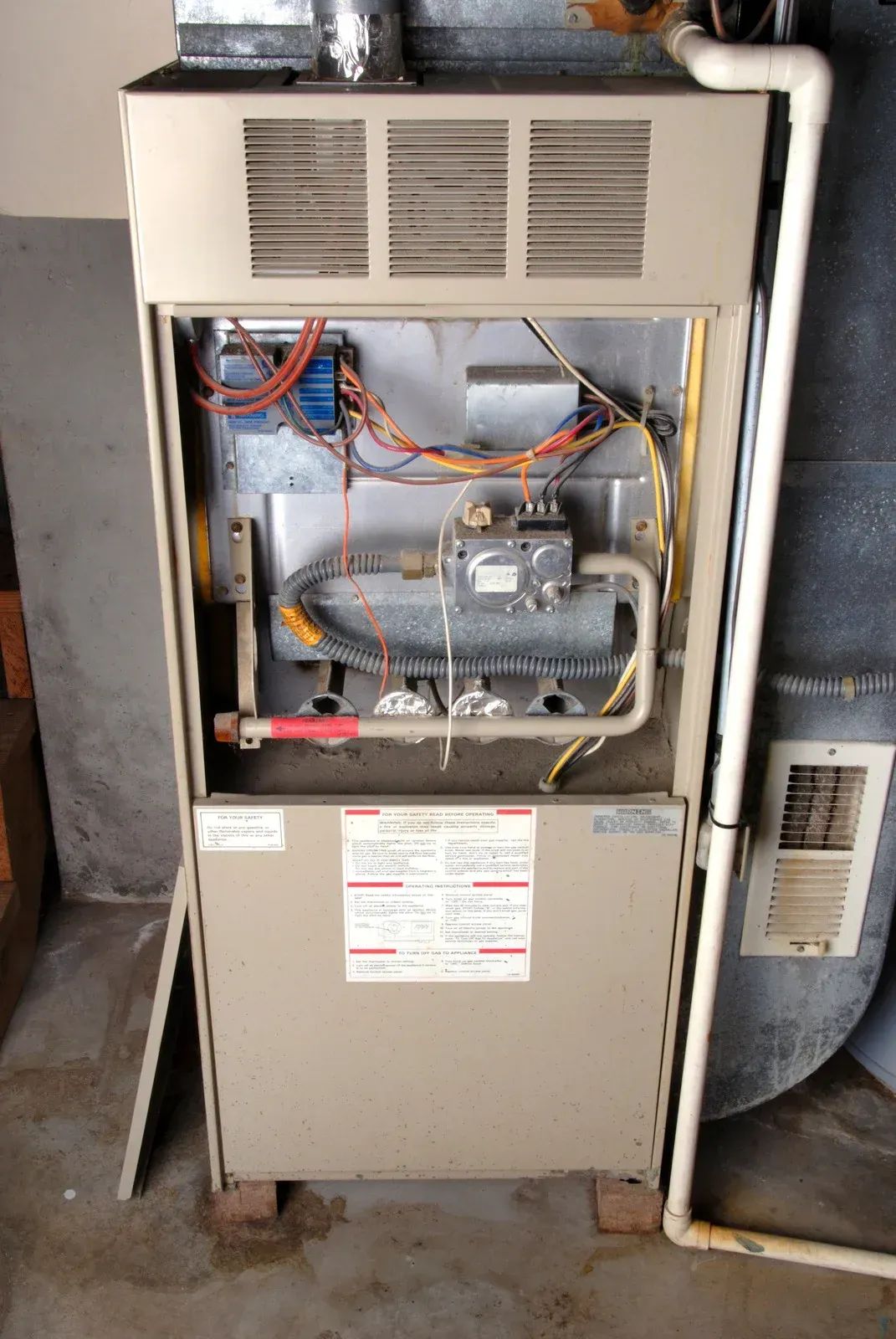
Quick Answer: Water pooling around your furnace or air handler almost always traces back to a clogged condensate drain line. High-efficiency furnaces produce several gallons of water a day as a normal part of heating, and that water travels through a narrow PVC line that algae, sludge, and dirt can block over time. When the line backs up, a safety float switch shuts the furnace down before the overflow reaches your floor. Clearing the blockage and checking the line's slope usually solves it for good.
You come downstairs on a cold January morning in New Albany, reach for the thermostat, and notice the air isn't moving. Then you spot it: a puddle spreading out from the base of the furnace, dark and quiet, like it's been sitting there for a while. Nothing dramatic happened. No burst pipe, no leak from upstairs. Just water, showing up where it shouldn't be.
That puddle isn't random. Modern furnaces and the air handlers paired with heat pumps both produce condensate as part of normal operation, and every drop of it has to travel down a small drain line to get out of the house. When that line clogs, the water has nowhere to go but back into the unit, and eventually onto your floor.
Here's what's actually happening inside that pipe, why it clogs more than most homeowners expect, and why your furnace shutting itself off is a good thing, not a malfunction.
Why Your Furnace Makes Water in the First Place
Older furnaces vent their exhaust straight up a metal flue while it's still hot. High-efficiency units work differently. They pull so much heat out of the combustion gases before those gases leave the house that the exhaust cools down enough to condense, the same way steam turns to droplets on a cold window. A furnace running at 95 to 97 percent efficiency can produce several gallons of this condensate a day during a cold stretch.
That water is mildly acidic, since it picks up trace compounds from the combustion process on its way out. It drains from the heat exchanger into a small pan, then down through a length of PVC pipe, usually three-quarters of an inch wide, toward a floor drain, a utility sink, a sump, or an exterior discharge point. It's a quiet system when it's working. Most homeowners never think about it. Which is exactly why a clog catches people off guard.
Air handlers work the line just as hard. During Kentuckiana's humid stretch from May through September, the evaporator coil on your AC or heat pump pulls moisture out of the air constantly, and that water shares the same drain path. So the line doesn't get a break between seasons. It's under load nearly year-round.
The Trap Isn't Just There to Catch Debris
Look closely at the drain line and you'll usually find a U-shaped or P-shaped bend before it exits the furnace cabinet. That's the condensate trap, and it does something more important than most people realize.
The trap holds a small reservoir of water that seals off the drain line from the rest of the system. Without it, the induced-draft blower inside a high-efficiency furnace could pull air backward through the open drain line instead of pulling it correctly through the burner and heat exchanger. That throws off the fuel-to-air mixture the furnace needs for clean, complete combustion. A dry or poorly primed trap can also let flue gases sneak back toward the drain path instead of staying contained and vented outside, which is exactly what the sealed design is supposed to prevent.
So when a technician tells you the trap needs to be primed or reseated after a repair, it isn't a minor detail. It's part of what keeps the combustion side of your furnace behaving the way it's designed to.
What's Actually Clogging the Line
Algae and biofilm are the main culprits. The inside of a condensate line is dark, damp, and warm for most of the year — close to ideal conditions for the same kind of slimy growth you'd find in a neglected fish tank. Over months, that growth thickens along the pipe walls until water can barely squeeze past it. It doesn't take a dramatic amount of buildup to choke off a three-quarter-inch line.
Dust and lint pulled through the return air stream add to the mess, mixing with the moisture to form a sludge that clings to the same spots where algae is already growing. In an unfinished basement or a mechanical closet near a workbench, sawdust and drywall dust make it worse. And in Clarksville and Sellersburg homes with furnaces or air handlers tucked into unconditioned garages or attic spaces, a hard freeze can seal the line shut with ice during a January cold snap, which backs water up just as effectively as any clog.
Then there's slope. The line needs a steady downward pitch, at least an eighth of an inch of drop for every foot of horizontal run, to keep water moving instead of sitting still. A line installed with a sag or a low spot creates a pool inside the pipe itself, and standing water inside a drain line is a head start for everything listed above.
Regular flushing helps more than most homeowners expect. A cup of distilled white vinegar poured into the line every few months, especially heading into heating season, breaks down early algae growth before it has a chance to build into a real blockage.
Why the Furnace Shuts Itself Off Instead of Just Overflowing
Most furnaces built in the last couple of decades include a condensate safety switch, usually a small float sitting in the drain pan or trap. When water rises past a set level, the float lifts, trips the switch, and cuts power to the furnace before the pan can overflow onto your floor.
It feels like the worst possible timing when it happens on a fifteen-degree night in Jeffersonville. But that shutdown is the system doing exactly what it's supposed to do. Without the switch, a clogged line would keep filling the drain pan until it spilled over the edge, and from there it's not just a puddle. It's water finding its way into ductwork, subflooring, and drywall, and that kind of damage costs far more to fix than a cleared drain line ever would.
If your furnace won't restart and you notice water nearby, don't keep resetting the switch and hoping it holds. Forcing the system to run with a tripped float switch defeats the one safeguard standing between a clog and real water damage to your home.
Why High-Efficiency Systems Deal With This More Than Older Ones
A standard 80 percent AFUE furnace barely produces any condensate at all, because it's venting so much heat straight up the flue that the exhaust never cools enough to turn to liquid. That's inefficient, but it also means those older units rarely dealt with drain line clogs.
High-efficiency furnaces trade that wasted heat for lower gas bills, and the tradeoff is a condensate system that has to work correctly every single heating cycle. Add Kentuckiana's swing between humid summers and cold, damp winters, and you've got a drain line that's rarely dry and occasionally at risk of freezing, all in the same twelve-month span. It's not a flaw in the equipment. It's just what comes with running a more efficient furnace, and it's the reason a condensate check belongs in every seasonal tune-up, not just a repair call after water's already on the floor.
Frequently Asked Questions
How much water should a furnace actually produce?
A high-efficiency furnace can put out several gallons of condensate on a cold day, which is normal. What matters is whether that water reaches the drain. If it pools instead, the line is the problem.
Can I clear a condensate clog myself?
A wet/dry vacuum sealed against the drain exit, followed by a vinegar flush, can pull out a minor clog. If it returns within weeks, the cause is usually a slope problem, failing trap, or buildup.
Is it safe to keep running the furnace if water is pooling?
No. Once you see standing water near the unit, shut it down before running it again. Operating a furnace with a blocked condensate path risks real water damage to surrounding floors, walls, and electrical components.
Does this happen to air handlers too, not just furnaces?
Yes. Any air handler with a heat pump or central AC produces condensate from the evaporator coil, draining through the same line. A summer puddle points to the same root cause as a winter one.
Why does the water smell musty when it finally drains?
Standing water in a clogged line sits in the dark long enough for mold and mildew to grow. When the clog clears, that odor pushes out. A musty smell often signals a slow clog forming.
Keeping The Drain Line Ahead Of Trouble
A puddle at the base of your furnace is rarely the start of the problem. It's the visible end of a slow buildup inside a line that has been quietly losing ground for months. The condensate system asks for very little, just a clear path and a steady downward slope, yet those two things are exactly what algae, sludge, and a settled sag work against. Understanding that chain is what turns a mysterious puddle into a solvable one.
That's also why a working float switch and a musty smell both deserve attention rather than a quick reset. Each one is telling you something the line can't say on its own. With 20 years of experience serving Jeffersonville, IN, Service By Shawn HVAC treats the drain, trap, and slope as a single system, since the puddle on the floor is almost never where the real trouble began. Catching it early keeps a cold night from turning costly.